The Short Version
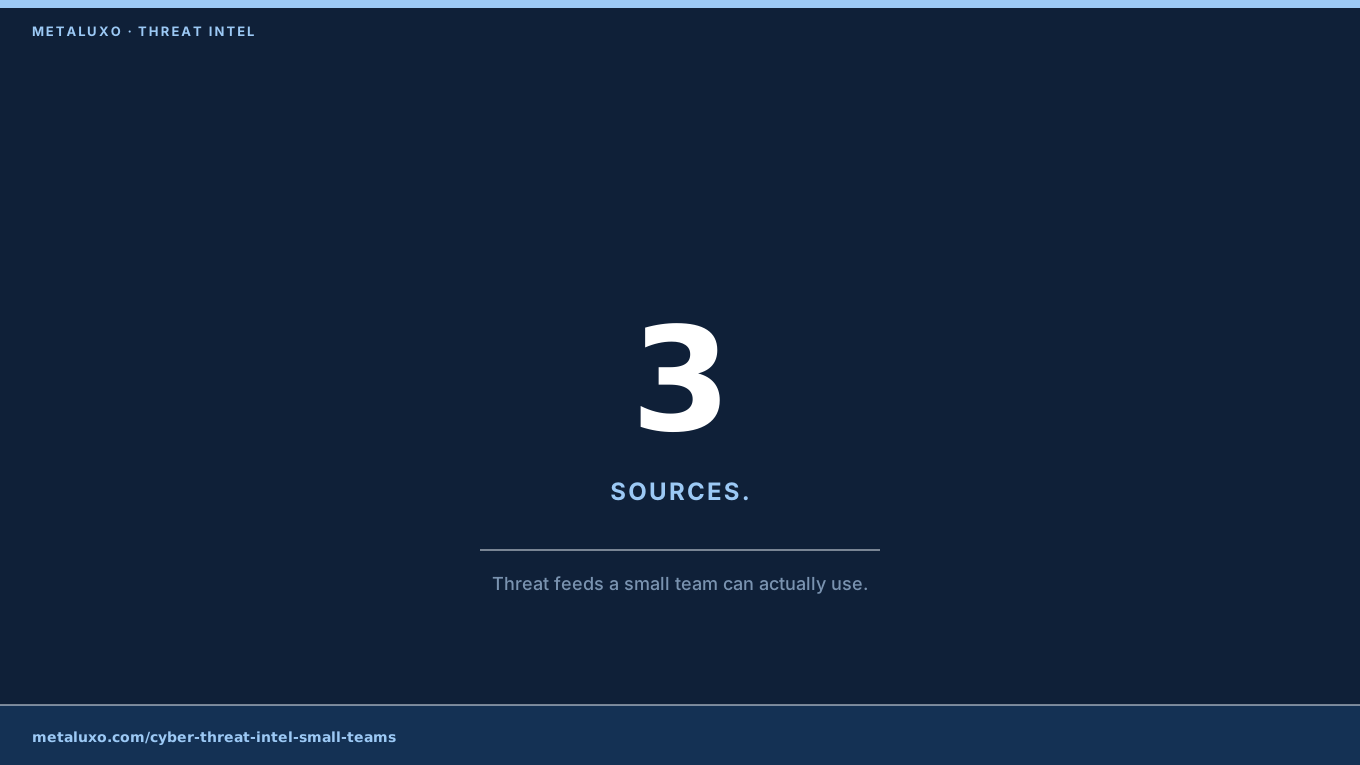
Threat intelligence has a marketing problem: vendors sell it as feeds, dashboards, and teams. For a small security team it is simpler — filtered answers to one question: does this threat affect our stack, and what do we do? Three sources, one question, one action a week.
What Can Threat Intel Do — and Not Do?
It can tell you which vulnerabilities in your stack are exploited in the wild, which phishing lures target your sector, and which vendor compromises touch your suppliers. It cannot replace patching, monitoring, or backups. Intel without action is trivia; action without intel is guessing. The value is the pairing.
Which Three Free Sources Cover an EU SMB?
- CERT-EU and ENISA. EU-focused advisories and threat landscapes — the regulatory context your auditors recognise.
- CISA alerts. US coverage with the best exploited-vulnerabilities catalogue (KEV) in the business — if it is in KEV and in your stack, patch now.
- Your sector ISAC. Industry-specific sharing — healthcare, finance, and tech ISACs carry the lures and TTPs aimed at you specifically.
Three subscriptions, one weekly 30-minute review. Anything more before you have the basics is noise.
When Should We Pay for Intel?
When you have a specific gap free sources cannot fill: brand monitoring, dark-web credential exposure, or sector-specific finished analysis. CrowdStrike, Recorded Future, and similar platforms earn their cost only after the free tier is operationalised — buy finished intelligence for decisions, not more feeds for the pile.
How Do We Operationalise One Finding a Week?
Each review ends with a single decision: patch, block, hunt, or ignore — with an owner and a date. Log it. Next week, verify. The log becomes your threat-informed defense record, and it is exactly what NIS2 Article 13’s sharing expectations and your cyber insurer want to see.
Bottom Line
Ignore 99% of threat intel confidently; act on the 1% that names your stack. If your team drowns in alerts but patches nothing, book a review — we will set up the three sources and the weekly rhythm in one session.
Common questions
What is cyber threat intelligence for an SMB?
Filtered, actionable information about threats to your specific stack — not raw feeds, but answers to whether a threat affects your systems and what to do.
Which free sources should we use?
CERT-EU and ENISA advisories, CISA alerts, and your sector ISAC — three sources covering EU, US, and industry-specific threats.
How do we avoid alert fatigue?
One relevance question filters everything — does this affect our stack — and a one-finding-per-week action cap keeps the workload sustainable.