The Short Version
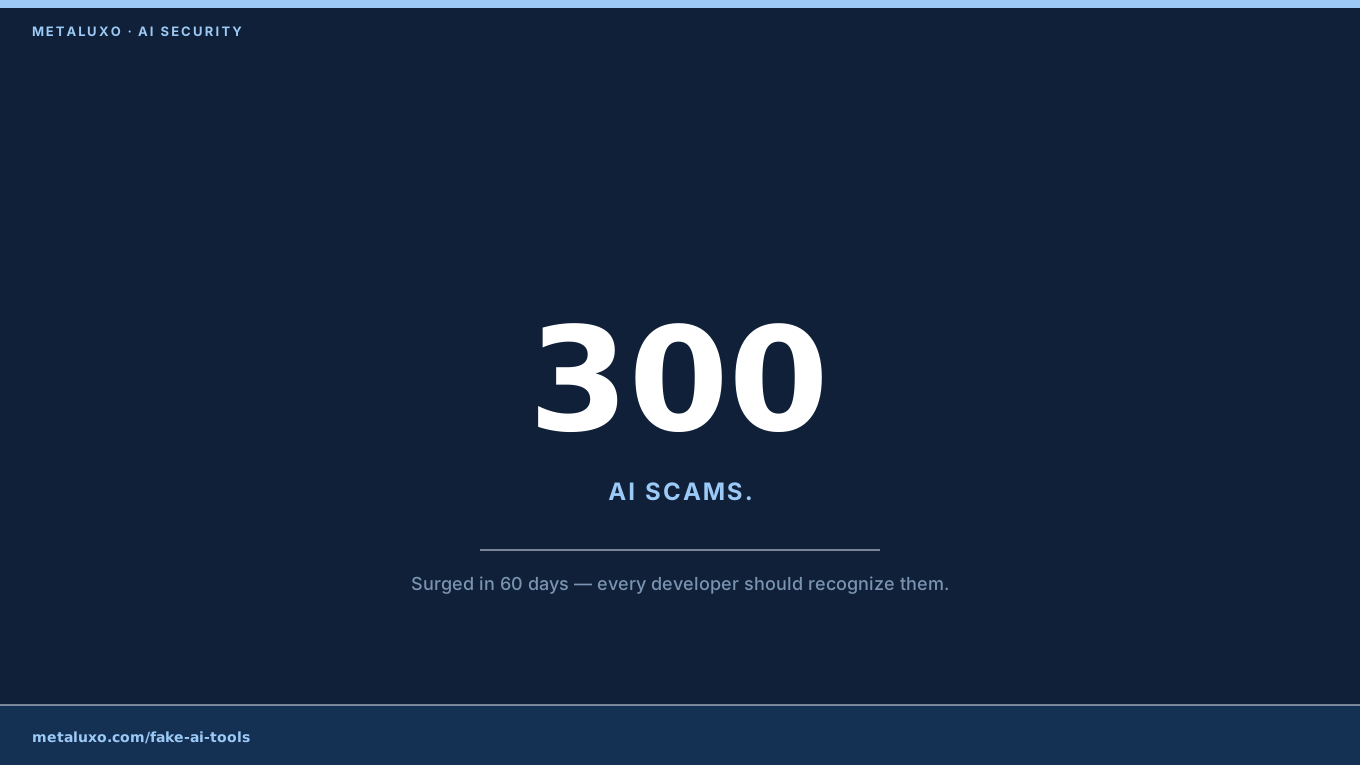
Cybercriminals have shifted from phishing emails to what researchers call “AI phishing” — fake interfaces that look like Claude, ChatGPT, or other legitimate AI assistants. These fake tools don’t just steal credentials. They install malware directly onto your systems. The campaign uses ClickFix-style tactics: a convincing error page that tells the user to copy and paste a PowerShell command. If your team has been using AI tools at work, assume some of them are not what they claim to be.
What’s New
A year ago, fake AI tools were crude copies. Now they’re pixel-perfect clones of the real interfaces. Attackers register domains like claude-ai[.]com and chatgpt-free[.]org, serve a UI that mirrors the real product, and capture every keystroke. But the most effective tactic is simpler and harder to defend against.
The attack works like this:
- User lands on a fake AI tool page (via Google Ads, search result manipulation, or a Slack message)
- The page shows a fake error: “Something went wrong — follow these steps to fix it”
- A “fix” button reveals a PowerShell command the user must copy and paste
- The command downloads and executes malware
This is the ClickFix playbook, repurposed for the AI boom. It bypasses email filters, EDR detection, and even MFA — because the user is willingly executing the command.
Why Developers Are the Target
Developers trust AI tools. They grant them access to code repositories, API keys, and deployment pipelines. When a fake AI tool captures a developer’s session cookie or SSH key, the attacker inherits that trust.
The campaign has three main vectors:
- Fake AI coding assistants that claim to offer “premium” features not available in the real product
- AI image generators that ask for API keys or download payloads
- AI chat interfaces that request file system access to “analyze” the user’s project
In every case, the attacker is banking on the user’s excitement about AI capabilities overriding their security instincts.
How to Spot a Fake AI Tool
Check the URL. The real Claude is at claude.ai. The real ChatGPT is at chat.openai.com or chatgpt.com. Any variation — claude-ai.com, openai-chat.com, ai-assistant[.]io — is suspicious. Hover before you click.
Look for login walls. Legitimate AI tools require authentication. If a “free AI tool” lets you start using it immediately without signing in, it’s harvesting data.
Scrutinize permissions. If the tool asks for access to your file system, email account, or code repositories — and it’s not a tool you’ve deliberately integrated — walk away.
Watch for urgency. “Your free trial ends in 2 minutes” or “Upgrade now to unlock all features” are pressure tactics. The real tools don’t need to pressure you.
What to Do Right Now
-
Audit AI tool usage. Survey your team: what AI tools are they using? Where did they find them? Are the URLs verified?
-
Implement allow-listing. Block all traffic to non-approved AI domains at the firewall. Create a clear list of approved tools and communicate it.
-
Enable SSO. If every AI tool requires SSO through your identity provider, you’ll see every login attempt and can flag suspicious ones.
-
Run a tabletop exercise. Simulate the ClickFix scenario. Show your team the fake error page. Train them on the spot.
EU Compliance Angle
Under GDPR Article 32, organizations processing personal data must implement “pseudonymisation and encryption of personal data” and “ensure ongoing confidentiality, integrity, availability and resilience.” A compromised AI tool that harvests credentials or access tokens is a direct GDPR incident — especially if it leads to exfiltration of EU citizen data.
NIS2 amplifies this: any digital service provider whose security incident “materially impacts” service provision must report within 24 hours. A developer workstation compromised via a fake AI tool can become the foothold for lateral movement into production systems. The material impact threshold is low.
What I Tell My vCISO Clients
“We used to block social media at the firewall. Now we need to block unauthorized AI.”
The shift to AI tools is happening faster than security policies can adapt. My recommendation for every client: treat AI tools like endpoints. Inventory them, approve them, monitor them. If you can’t approve a tool, your team can’t use it — on company devices, on company networks, period.
I recommend three controls:
- AI tool inventory — quarterly survey of what’s being used
- Domain allow-listing — only approved AI tool domains resolve internally
- Credential monitoring — alert on any new AI service appearing in your identity logs
Bottom Line
AI tools are here to stay. The question is not whether your team will use them — it’s whether they’ll use the real ones or the fake ones. In a landscape where impersonation campaigns are growing exponentially, trust without verification is a vulnerability.
If you’re an EU SMB and you don’t have an AI usage policy in place, book a review. We’ll draft one that covers the real risks without blocking legitimate productivity.
Common questions
How do I spot a fake AI tool?
Check the URL (real Claude is at claude.ai, real ChatGPT at chat.openai.com or chatgpt.com), look for login walls, scrutinize permissions, and watch for urgency tactics.
What is the ClickFix playbook?
A fake error page that tells users to copy and paste a PowerShell command to 'fix' an issue, which actually downloads and executes malware.
What should I do right now?
Audit AI tool usage across your team, implement domain allow-listing, enable SSO, and run a tabletop exercise simulating the ClickFix scenario.